

100% Natural 
​Origin

Environmentally
​​Clean Region​

International Quality
​Standard

Stable Mineral
Composition

Naturally High-Mineral Water Sourced from the Heart of the Ukrainian Carpathians

Transcarpathian Mineral Waters have been renowned since ancient times for their beneficial properties. Formed at depths exceeding 100 meters, this water travels through ancient geological layers, becoming enriched with vital minerals such as magnesium, calcium, bicarbonates, and sulfates.


Shayanska

One of the finest carbonated, bicarbonate, sodium, and silica-rich medicinal-table waters of Zakarpattia, with mineralization of 1.5–3.5 g/L. 

It is bottled directly from well No. 242-r, located at a depth of 215 meters, on the grounds of the “Shayan” Sanatorium.
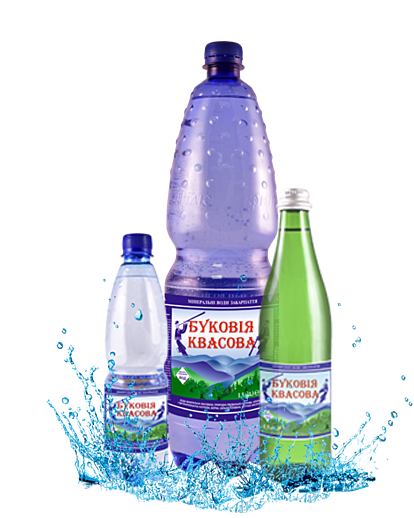
Bukoviya Kvasova
One of the finest representatives of carbonated, chloride-bicarbonate, sodium, and boron-rich mineral waters

with a mineralization level of 4.0–7.1 g/L. Enriched with a variety of minerals, it acquires a unique composition and a distinctive, unforgettable taste.

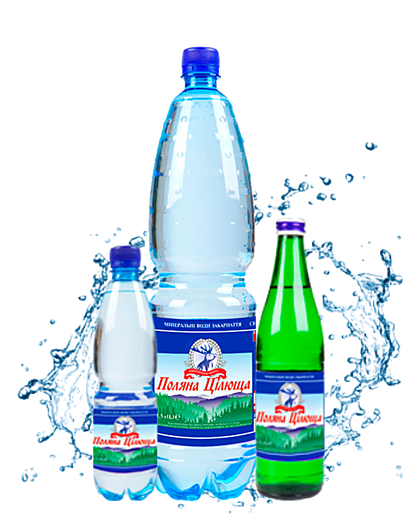
Polyana Tzeluscha

By its characteristics, it resembles the classic chloride-bicarbonate sodium waters of Zakarpattia, with a relatively low mineralization level of 1.20–2.50 g/L, making it suitable for everyday use to support hydration and restore the body's natural balance.

More details ...

Transcarpathian Mineral Waters  meets European quality standards.

It is bottled under modern, environmentally clean conditions, preserving its natural composition and healing properties. The product is exported to the EU, the United Kingdom, Canada, and Israel — steadily gaining its place on the global market of premium mineral waters, combining authenticity, purity, and natural therapeutic benefits.

Nutritionists include in the Transcarpathian Mineral Waters programs:

  • For balanced nutrition
  • For recovery after illness
  • For correcting mineral deficiencies
  • For preventing chronic fatigue and anxiety
  • For supporting digestion and acid-base balance

View More

NHS and British Nutrition Foundation statement

Over 30% of adults in the UK are deficient in magnesium and calcium. These minerals are critical for:
Heart health
Energy exchange
Maintenance of bone tissue
Digestive work
Maintenance of bone tissue
Balance of the nervous system

A natural way to replenish minerals

Highly mineralized water is a natural way to replenish minerals, without additives and without pills, it is:

Natural alternative to synthetic food additives
Recovery after workouts and restrictive diets
Relief of symptoms of irritable bowel and acid imbalance
More details ...
History of European recognition

From the beginning of the 19th century, mineral water began to be bottled and exported.

Transcarpathian mineral waters were exported to Vienna, Paris, Odesa, and Budapest. Products from Shayan, Polyana, and Svalyava received awards in Budapest in 1842, and from 1842 to 1911 — nearly two dozen prizes at international exhibitions. This marked the beginning of their European fame!

The first scientific studies of water..

The first scientific research was initiated in 1755 by Count Eugene-Erwin Schönborn, the owner of most of the springs in the region.

In 1775, Dr. A. Sebeok conducted the first chemical analysis of the water — and confirmed:

"This is not just delicious water, but a source of minerals and natural vitality, capable of improving health!"

The first hydrotherapy centers

As early as the 16th–17th centuries, local people dug out “kolobani” — small basins at the sites of mineral springs, where they created bathing places that served as natural healing spas.
They treated rheumatism, diseases of the gastrointestinal tract, skin, metabolism, liver and kidney diseases. This is how the folk tradition of balneological treatment arose, which lives and develops to this day.
Legends of Transcarpathian water

One local legend tells of a shepherd whose sick sheep bathed in a spring of “kvass water” and miraculously recovered.
Thus, by chance, our ancestors discovered the natural healing power of the local burkuts.

In ancient times, the Rusyn people called mineral springs burkuts — waters bursting from the earth with a hiss and natural effervescence.
This word burkut is still used in the Carpathian Mountains today. Its synonym, kvass water, speaks for itself: a pleasant, refreshing, slightly tangy taste that even reminded the envoys of Ivan the Terrible (16th century) of “pear kvass.”
In their reports to the Tsar, they specifically noted that the Carpathian Mountains were rich in extraordinary waters with unusual and beneficial properties.